
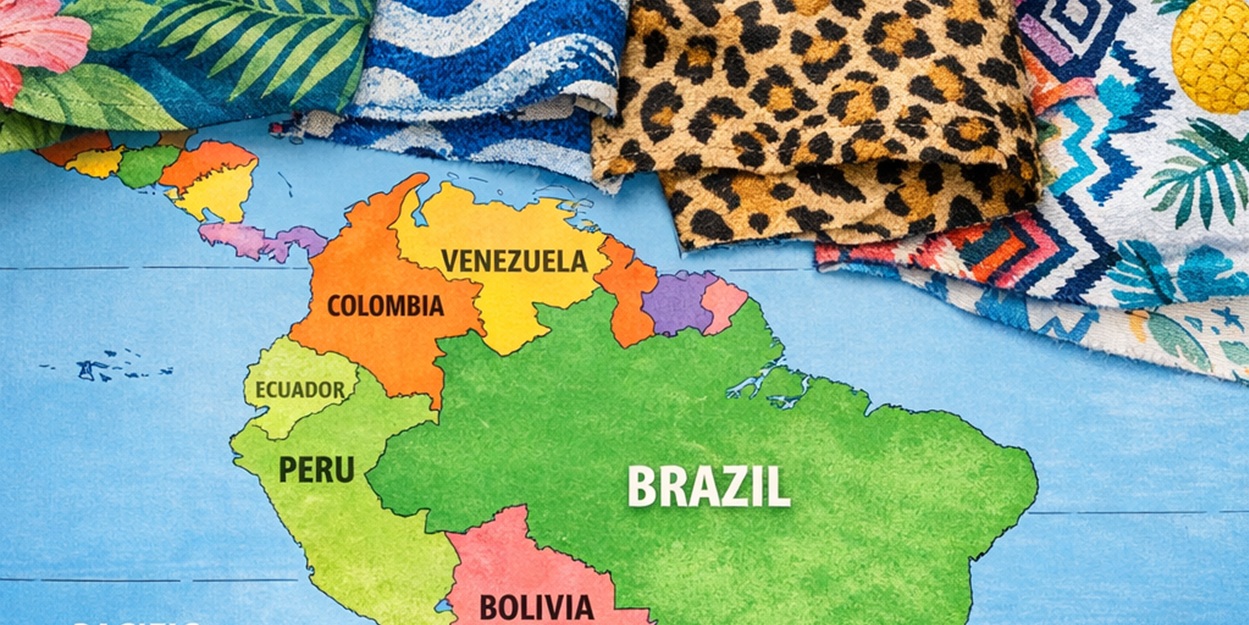
EU-MERCOSUR Agreement: a real opportunity for the textile and fashion industry
After more than twenty-five years of negotiations, the Ambassadors of the European Union countries have given political approval for the signing of the EU–MERCOSUR agreement, the largest free trade agreement ever negotiated by the European Union, which will lead to the creation of a free trade area of around 800 million people.
The agreement provides for the elimination or substantial reduction of tariffs on products and services accounting for more than 90% of EU exports.
“I believe that for our sector this is certainly a good opportunity,” stresses Claudio Taiana, President of MarediModa, “as it overcomes most of the customs and non-customs barriers that today make access to these markets very difficult, if not impossible in some cases. Our hope is that, once the agreement is properly regulated and the sensitive aspects involving the agricultural and food sectors are resolved, it can enter into force soon, triggering a boost in exports for our European industry.”
The main points of the agreement include:
• the elimination of high MERCOSUR tariffs, allowing EU exporters to save more than €4 billion per year in customs duties;
• simplified customs procedures for European exports;
• exclusive preferential access to certain critical raw materials and specific green products;
• a ban on the imitation of more than 340 traditional EU food products recognized as geographical indications, including 57 Italian ones. This is the largest number of geographical indications ever protected in an EU agreement;
• compliance with European standards for products from MERCOSUR countries imported into the EU.
“This agreement represents one of the few real growth opportunities over the next five to ten years and a chance to build a single market in a world increasingly fragmented by barriers,” Luca Sburlati, President of Confindustria Moda, told Corriere della Sera. “This is particularly important given that our sector has lost around €20 billion in two years and is going through a phase of extreme difficulty. In this context, the agreement would offer hope for a return to growth.”
The Mercosur area represents a market that deeply appreciates Made in Europe products, but which until now has been almost inaccessible due to extremely high tariffs in many countries: between finished products and semi-finished goods, duties range from 60% to as much as 100%. These are nevertheless countries with a consumer class interested in beauty and high-quality craftsmanship. In fact, this amounts to around 800 million potential consumers, who could partly offset the loss of the Chinese market and the difficulties caused by tariffs in North America. In the long term, for the textile and fashion sector, giving up on Mercosur would mean excluding oneself from a market worth several billion euros. According to the report Exporting the Dolce Vita (Confindustria Research Centre – 2023), the Brazilian market alone offers additional export potential for apparel and home textiles of €76 million.
